Turnkey Lines, One Stop
Six proven lines, modular 1–15 t/h capacity, fully contracted — the complete machine set supplied from one source.
A dedicated account manager follows the whole project one-on-one, keeping it on schedule.
Standard rubber lines · Turnkey delivery
Coverage: TSR / SMR / STR / SIR / SVR / SCR · RSS · Compound Rubber
Multiple proven line solutions — the complete machine set from one source, with a dedicated account manager following every step from design to production
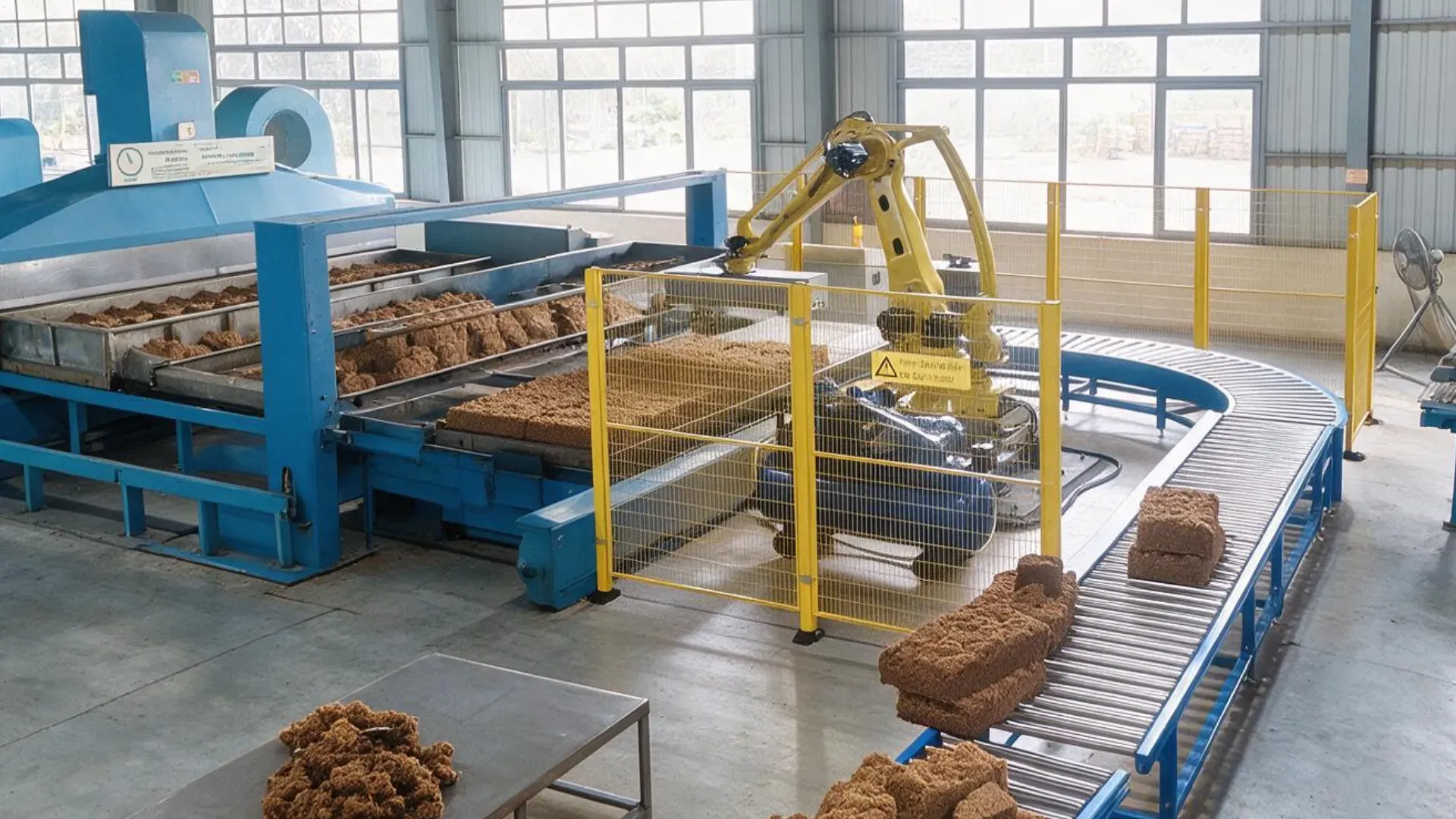
Robotic feeding, auto unloading, auto palletizing — fewer operators, steadier production rhythm
Optional deodorization and wastewater recycling equipment to cut odor and wastewater discharge
Dryer recycles exhaust air and accepts multiple fuels, lowering operating costs
Robotic arms, automatic unloading and cutting, automatic casing and palletizing, plus PLC central control — fewer operators, steadier rhythm.
Feeding, transferring and stacking bales to replace high-intensity manual work, helping stabilize production rhythm and reduce work-intensity risks.
Fully automatic horizontal disc cutter (auto feeding / cutting / discharging); needle-type unloading device (automatically unloads 12 or 14 dry bales at once).
Casing and packing machine: automatic casing + packing, 50% higher efficiency and 1–2 fewer operators per shift, paired with a robotic arm for palletizing.
Line interlocking, fault alarms, output statistics; reserved interfaces for remote O&M and digital management.
From complete line solutions and core machines to installation, training and long-term service, we cover the full natural rubber primary processing journey — delivering a production system built to run.
Six proven lines, modular 1–15 t/h capacity, fully contracted — the complete machine set supplied from one source.
A dedicated account manager follows the whole project one-on-one, keeping it on schedule.
Robotic arm feeding / palletizing, automatic disc cutting, needle-type unloading, automatic casing & packing (saves 1–2 operators per shift) plus PLC central control.
Less repetitive manual work, steadier production rhythm and easier continuous operation.
Sealed odor sources + exhaust collection + deodorization tower + boundary online monitoring, engineered in one package: wet-scrubber odor removal can reach over 90%, wastewater recycling up to 80%+ (subject to actual site conditions and testing data), with automatic record keeping.
Well-engineered environmental systems help smooth environmental acceptance and make compliance management more transparent.
Hot-air through-drying line (exhaust recycling, multiple fuel options) lowers energy use, with an energy-savings report available.
Lower long-term operating cost and more flexibility in fuel choice.
Mud rubber pre-washing machine plus single/dual screw breaking-washing machines (pre-wash + fine-wash two-stage cleaning), backed by multi-country feedstock experience.
Cup lump, block, mud and scrap rubber processed consistently for stable output quality.
Free equipment inspection, full-process updates, full-lifecycle technical archive (drawings kept 10+ years), 24-hour response and original spare parts.
Long-term reliable operation with ongoing maintenance and parts availability.
Six line types — TSR standard rubber, compound, crepe, RSS, wet-blending and dewatering — configured to your feedstock and capacity.
1–15 t/hr dry rubber for export-oriented and large-scale centralized plants, meeting TSR international standards.
Cup lump · Block rubber · Latex coagulum · Scrap
TSR10 / TSR20 bales · ISO 2000
Star single machines from breaking to baling — sold individually or combined into complete lines.
Integrates natural rubber crushing, washing, conveying, and initial dewatering — a core cleaning unit for TSR processing lines.
Crushes large coagulum, cup lump and rubber blocks for TSR pretreatment, with optional spray washing for cleaner downstream processing.
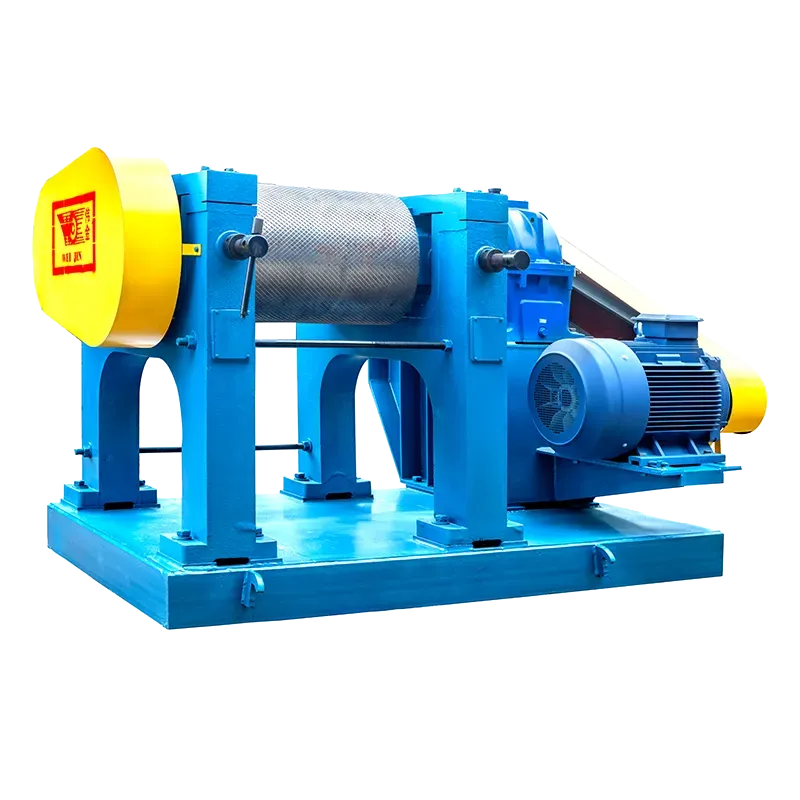
For washing, dewatering and sheeting natural rubber, helping TSR lines reduce moisture and improve sheet consistency.
Shreds crepe sheets into uniform granules — a key TSR granulation unit that improves hot air penetration and product consistency before drying.
Built for continuous drying of natural rubber granules and blocks, supporting multiple fuel options to improve drying efficiency and energy control.
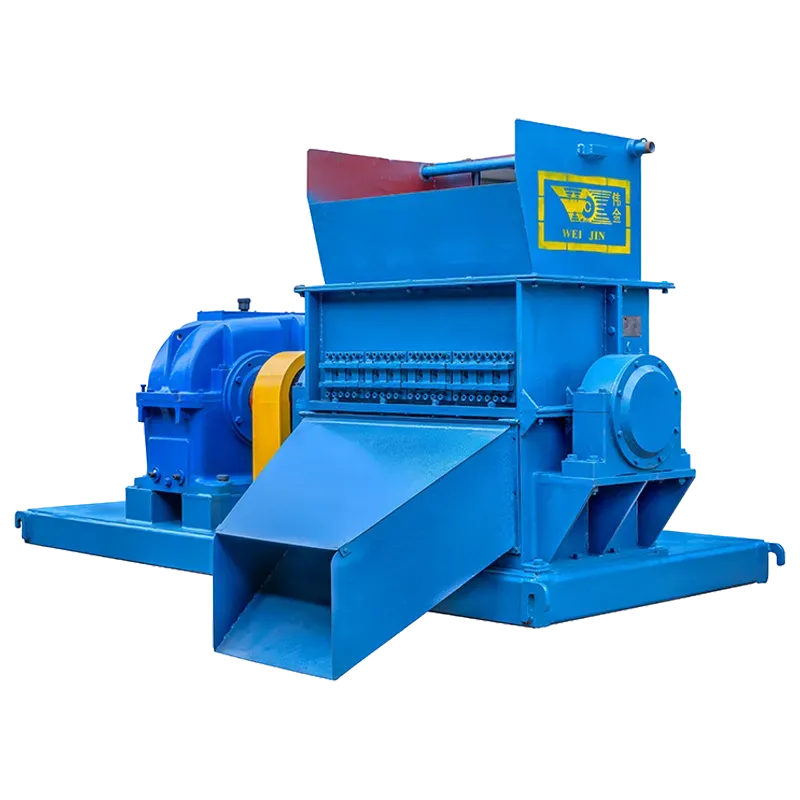
Cuts natural rubber blocks, coagulum and primary feedstock into uniform sizes for smoother feeding, washing, dewatering and conveying.
Used in the final packing stage to compress and form rubber into standard bales for efficient TSR packaging.
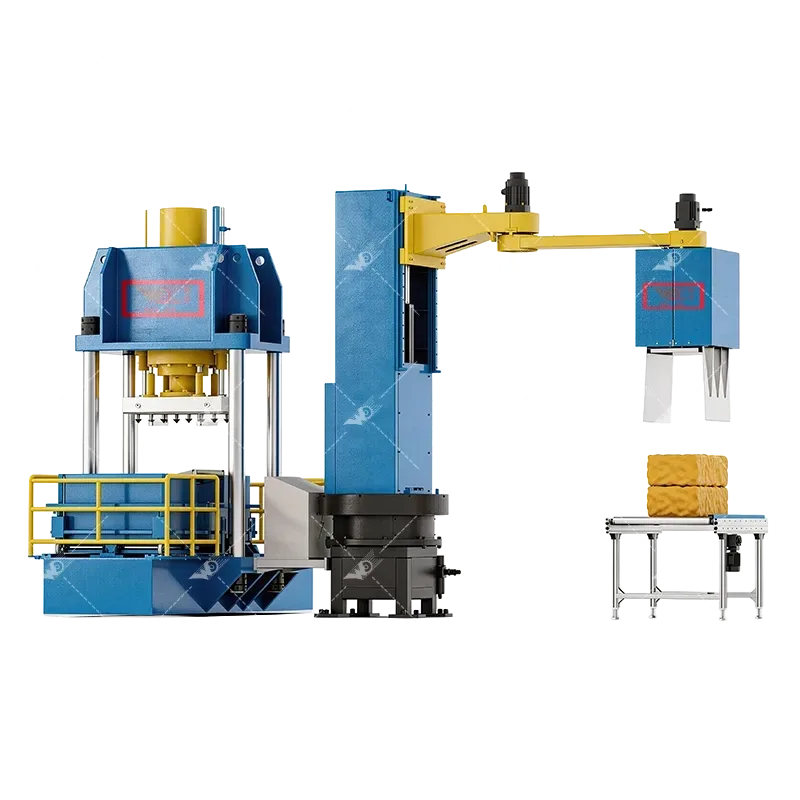
Automated casing and hydraulic baling for natural rubber and reclaimed rubber, paired with a robotic arm to improve packing efficiency and keep bale output consistent.
Robotic arm for unloading, casing and palletizing, reducing manual handling and improving line automation.
Automatically pulls hot rubber blocks from TSR drying trolleys and transfers them, reducing manual heat-exposure risk and improving unloading efficiency.
For high-mud, high-sand natural rubber, combining crushing, tearing and deep washing to improve downstream squeezing, dewatering and drying.
For RSS smoked sheet production, continuously sheeting, dewatering and embossing latex coagulum to improve sheet quality.
On-site conversion of feedstock into higher value
Scaled-up, standardized production
Meeting TSR, RSS international standards
Compound and intermediate feedstock processing
Upgrading manual lines to automated lines
Delivered across Africa, Southeast Asia and South America — serving overseas customers near their plants.
Côte d'Ivoire (10/6/5/4/3/2 t/h) · Ghana (4/3 t/h) · Liberia (3/2 t/h) · Nigeria (2 t/h) · Cameroon
Thailand (6 t/h compound) · Laos (10 t/h) · Vietnam (2 t/h) · Myanmar (3/5 t/h) · Cambodia (5 t/h) · Indonesia · Malaysia
Brazil (3 t/h automated) · Colombia (3 t/h) · Mexico (3 t/h)
Yunnan (6 t/h) · Hainan (3 t/h) · Guangxi
From engineering drawings to long-term spare parts — full-lifecycle service around your equipment.
Complete drawings — plant layout, equipment foundation and arrangement plans.
On-site or remote installation, commissioning and operator training; long-term resident engineers for overseas projects.
For aging plants: free equipment checkup → line self-inspection checklist → on-demand machine renewal → energy-saving retrofits. Check first, then upgrade where it pays.
Genuine spares and wear parts kept in stock at our factory and shipped promptly on demand; technical archives and full drawings kept 10+ years for factory-quality parts later.
Export packing, ocean freight arrangement and documentation support; reliably delivered to 100+ countries.
Everything above, packaged — consultation → design → selection → installation & training → long-term support, with one dedicated manager throughout.
Turnkey lines, energy, feedstock adaptability, after-sales and more.
Yes. We provide the full flow — consultation → design → selection → installation & training → long-term support, with one dedicated manager throughout; single services are also available.
Motor power is sized to the duty; under normal load running power is about 70%–80% of rated. Drying lines recycle exhaust to cut energy use.
Cup lump, block rubber, mixed scrap, mud rubber and set coagulum — parameters are adjusted for impurity and moisture levels.
Yes. Machines work standalone or as standard process units in a line.
Yes. Long-term stable operation in tropical regions like Africa and Southeast Asia, with reinforced corrosion, moisture and drive protection.
Single machines 45–60 days; complete lines 60–90 days, subject to configuration and schedule.
Yes. Equipment is exported to Africa, Southeast Asia and South America; engineers can install, commission and train on site.
12-month machine warranty, 24-hour initial response, long-term technical support and genuine spare parts after warranty.
Share feedstock, target capacity and site info — our engineering team will respond with equipment configuration and process flow.
Type to search the whole site
No results found